Deniz Undav etched his name into German football folklore on Saturday evening at BMO Field in Toronto, delivering a stunning two-goal performance off the bench to rescue a 2-1 victory over Ivory Coast and send Germany into the FIFA World Cup knockout stages for the first time in 12 years. The VfB Stuttgart striker entered the fray in the 60th minute with Germany trailing 1-0 and completely transformed the match, scoring a 68th-minute equalizer before snatching a 94th-minute winner that sent the German supporters into delirium.
How Deniz Undav Turned the Tide: Inside Germany's Dramatic Comeback
Ivory Coast, who had kept clean sheets in all 10 of their World Cup qualifying matches plus their tournament opener against Ecuador, looked well on their way to another shutout after captain Franck Kessié opened the scoring in the 30th minute. The Elephants, organized in a disciplined 4-1-4-1 defensive shape, had outplayed Germany for much of the first hour, threatening with pace on the counter-attack and stifling the creative outlets of Jamal Musiala, Florian Wirtz, and Kai Havertz.
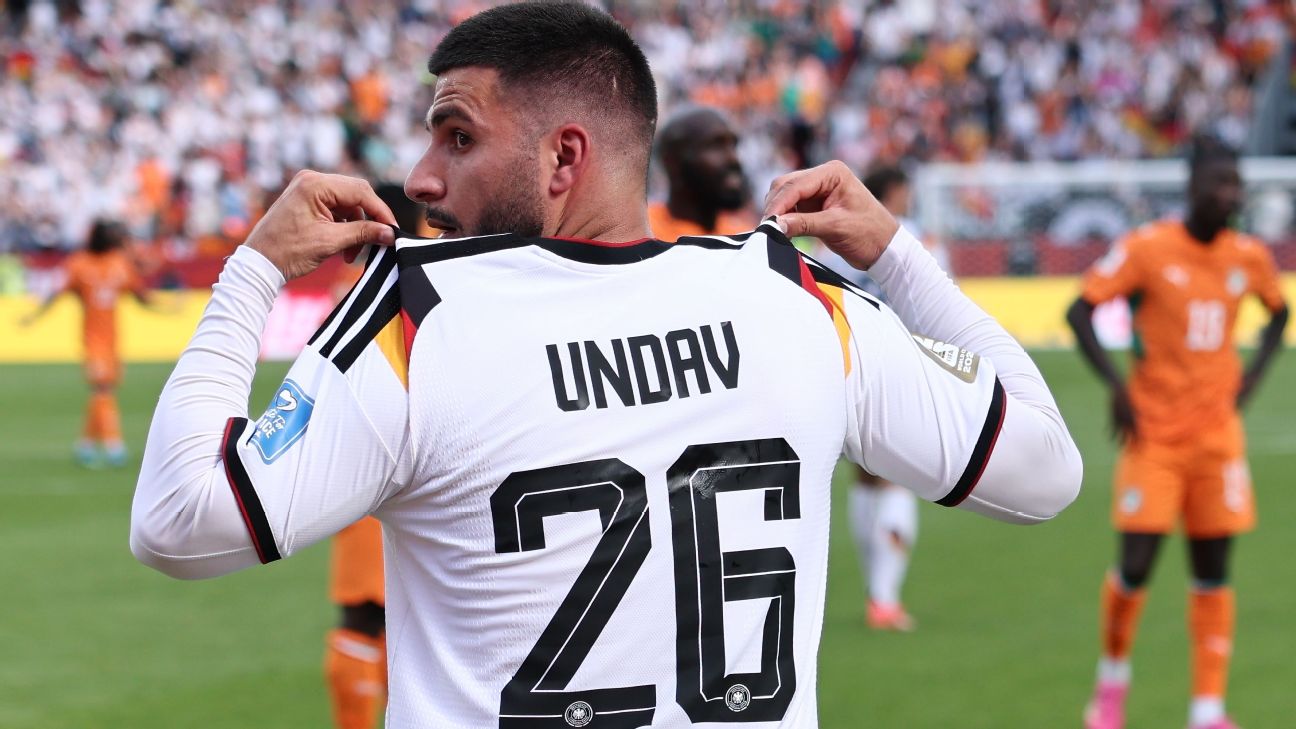
Germany coach Julian Nagelsmann had seen enough. In the 60th minute, he sent on Undav, Jamie Leweling, and Nadiem Amiri to replace Musiala, Aleksandar Pavlović, and Leroy Sané. The impact was immediate. The tone of the match shifted as Germany began playing with a renewed sense of urgency and purpose. Eight minutes after coming on, Amiri's pinpoint cross found Undav unmarked in the box, and the striker produced a magnificent volley that flew past the Ivory Coast goalkeeper to level the score at 1-1.
Timeline: How Undav's Heroics Unfolded in Toronto
The match followed a narrative arc that has become increasingly familiar to German fans. Ivory Coast dictated the tempo for long stretches, with Yan Diomande repeatedly exploiting space behind Joshua Kimmich. The Elephants' opener came from a swift move that pushed Diomande to the endline, whose hard cross was initially blocked but fell kindly for Kessié to smash home the rebound in the 30th minute.
Germany struggled to break down a well-drilled Ivory Coast defense that conceded just one goal across their two group matches before Saturday. Ivory Coast coach Emerse Faé had his side well-prepared, and the Africans looked destined to secure at least a point that would have left Group E wide open heading into the final matchday.
Then came Undav. The 29-year-old's equalizer in the 68th minute was a moment of pure quality — a striker's finish that showcased the technical ability and composure that made him undroppable for Stuttgart this season. But he wasn't done. As the clock ticked into stoppage time with the score locked at 1-1, Felix Nmecha played an inch-perfect ball that caught the Ivory Coast defense napping. Undav, displaying remarkable awareness and a burst of acceleration, executed a blind turn and fired a shot that nestled into the back of the net in the 94th minute.

The Bigger Picture: Why Undav's Super-Sub Role Is Sparking a National Debate
Undav's heroics have ignited a passionate debate across German football. In just 60 minutes of World Cup action across two substitute appearances, Undav has amassed a staggering five goal contributions — three goals and two assists. His opening-match performance against Curaçao was equally impactful, and the numbers make an almost undeniable case for his inclusion in the starting lineup.
Yet Nagelsmann remains cautious. When asked whether Undav had done enough to earn a starting berth against Ecuador, the German coach responded: "It's possible. But he's doing very well in his current role. It can go in both directions." The reluctance to commit stems from tactical considerations — Undav appears best suited to play underneath Havertz in Nagelsmann's current system, a change that would push Musiala out wide and alter the team's attacking dynamic.
Former Germany striker Jürgen Klinsmann has been among the most vocal advocates for Undav's promotion to the starting XI. "He deserves to start," Klinsmann said after the match. The stats back him up. Undav brings a structural element to Germany's attack that Havertz has struggled to provide — his ability to play with his back to goal, hold up play, and create space for the technicians around him has made Germany's attack significantly more potent.
The contrast between Germany's performance before and after Undav's introduction was stark. In the first hour, the German attack was slow, methodical, and predictable, with only Musiala consistently winning his 1v1 battles. Undav's burst of acceleration and natural proclivity to drift away from markers turned him into a menace that Ivory Coast simply couldn't handle.
Where Things Stand Now: Germany's Road Ahead
The victory propelled Germany to the top of Group E with six points from two matches, clinching their place in the Round of 32 for the first time since their triumphant 2014 campaign in Brazil. It also snapped a troubling pattern of group-stage struggles — in 2018, Germany crashed out at the group stage as defending champions, and in 2022 they suffered another group-stage elimination.
Germany's final group match against Ecuador on Thursday, June 25, will determine whether they claim top spot and secure a more favorable knockout-round matchup. The performance against Ivory Coast, however, exposed lingering concerns beyond the result. Germany struggled mightily against Ivory Coast's pace and defensive organization, and Nagelsmann will need to address these issues before the knockout rounds begin.
What Happens Next: The Undav Decision Looms Large
Nagelsmann faces what may be the defining decision of his tenure. Starting Undav would reward the in-form striker's remarkable impact but would require reshuffling an attack that also features talents like Musiala, Wirtz, and Havertz. Keeping him as a super-sub preserves the tactical flexibility that has yielded five goal contributions in just 60 minutes but risks starting matches without Germany's most dangerous attacker.
For his part, Undav seems unfazed by the speculation. The Stuttgart striker, who has waited years for his chance with the national team, is simply enjoying the moment. "He makes the game easier for everyone, and he's loving the responsibility of leading Germany back to the top of the game," wrote Renato Gonçalves of Barca Blaugranes. Whatever Nagelsmann decides, one thing is clear: this World Cup was not supposed to be Deniz Undav's, but it has quickly become just that.
The Bottom Line: Key Takeaways from Germany's Comeback
- Deniz Undav is Germany's most impactful player — Five goal contributions in 60 minutes off the bench is unprecedented production at this World Cup.
- Germany clinched knockout football for the first time since 2014 — The win over Ivory Coast ended a 12-year drought of group-stage exits.
- Nagelsmann has a selection headache — The debate over whether to start Undav or deploy him as a super-sub will define Germany's knockout strategy.
- Ivory Coast proved they belong — Emerse Faé's side pushed Germany to the limit and showed they are a force to be reckoned with despite the result.
- Germany faces Ecuador next — The final group match on June 25 will determine Group E's final standings and knockout-round positioning.