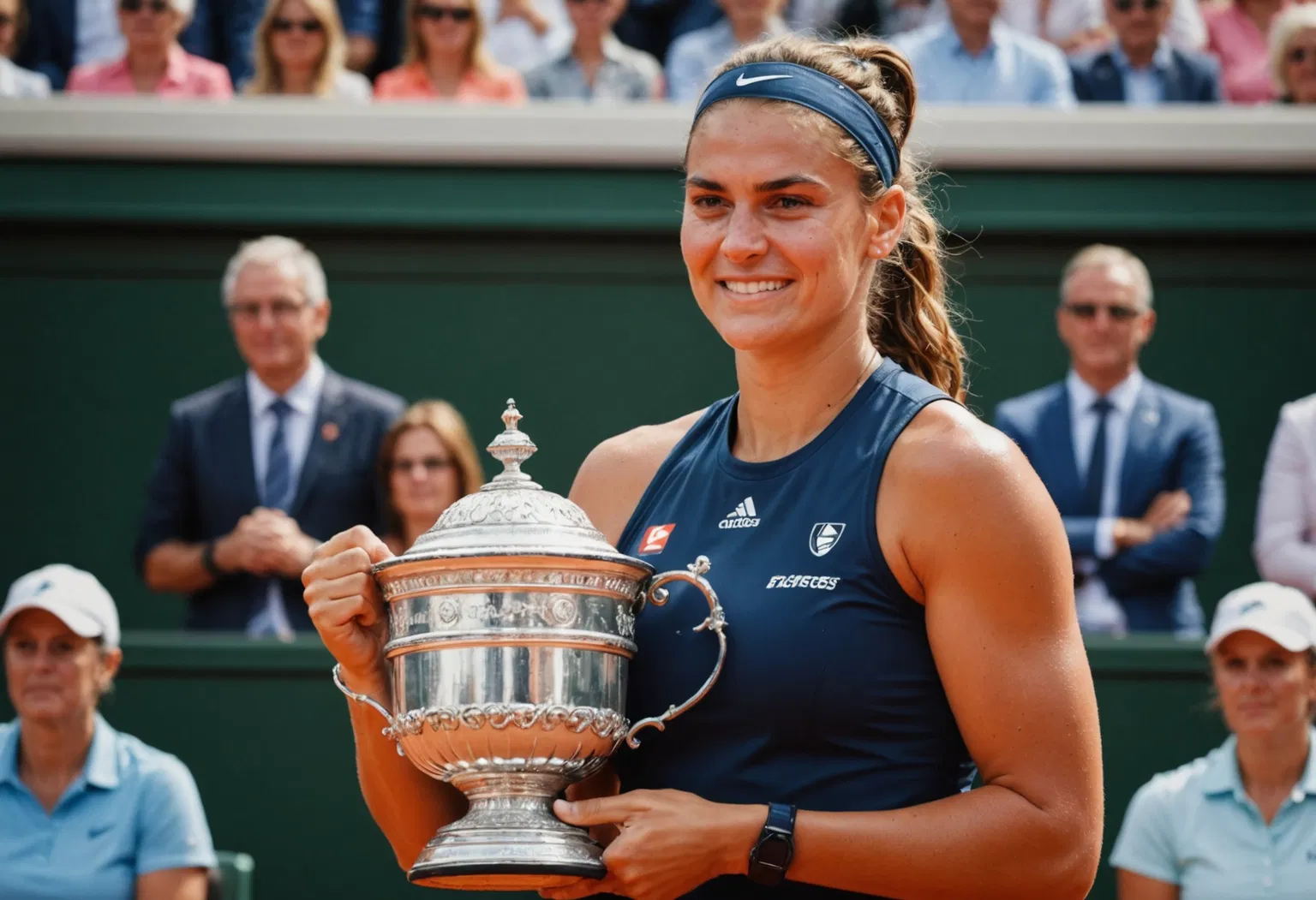
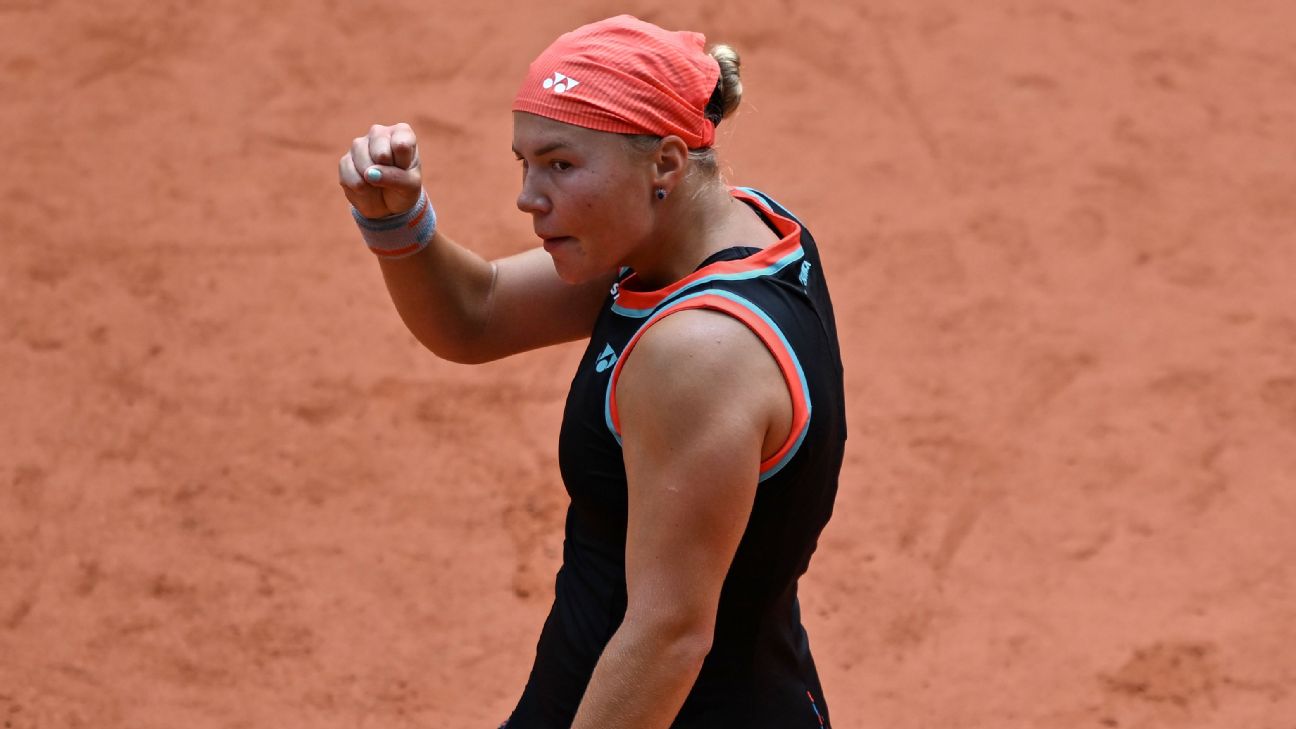
In one of the most remarkable turnarounds in recent Grand Slam history, 22-year-old Diana Shnaider pulled off the unthinkable at Roland Garros on Wednesday, coming from a set and a double break down to defeat world No. 1 Aryna Sabalenka 3-6, 7-5, 6-0 and book her place in the French Open semifinals for the first time in her career.
The 25th seed, who entered the match as a heavy underdog against the two-time Australian Open champion, showcased nerves of steel as she won the last 10 games in a row, leaving Sabalenka shell-shocked on Court Philippe-Chatrier. The Belarusian, who was cruising at 6-3, 4-1 and just two games from victory, completely lost her composure as Shnaider flipped the match on its head with fearless ball-striking and relentless pressure.
How the Comeback Unfolded: Inside Shnaider's Stunning Reversal
For the first set and a half, it looked like business as usual for Sabalenka. The world No. 1 was dictating play with her trademark power, breaking Shnaider's serve with ease and racing to a commanding lead. But with Sabalenka serving at 4-1 in the second set, the match turned on a dime. Shnaider broke back, held, and suddenly the momentum shifted irrevocably.
"When I was down 4-1, I just told myself to try to win one more game, then another," Shnaider said after the match. "I didn't think about winning the match. I just thought about playing every point." That single-minded focus paid off spectacularly as she won the second set 7-5 and then steamrolled Sabalenka 6-0 in the decider, breaking the world No. 1's serve three times in the final set alone.
The Russian left-hander, who is coached by Sascha Bajin (formerly Serena Williams' hitting partner), played with remarkable composure as Sabalenka's error count ballooned. The windy conditions, which have troubled Sabalenka in Paris before, once again proved her undoing. She finished the match with 45 unforced errors, many of them coming in the final set as her game completely disintegrated.
Timeline: How Shnaider Turned Defeat into Victory
First Set (Sabalenka 6-3): Sabalenka came out firing, breaking Shnaider twice with her powerful groundstrokes. The world No. 1 won 82% of her first-serve points and looked in complete control.
Second Set, 1-4 down: Shnaider looked destined for a straight-sets exit. Sabalenka was serving at 4-1, 30-0 and just four points from the match. Then the comeback began.
Second Set, 4-4: After breaking back and holding, Shnaider had levelled the set. Sabalenka's level began to dip as errors crept into her game.
Second Set, 7-5 Shnaider: Shnaider broke Sabalenka at love to take the second set, having won six of the last seven games. The momentum had completely shifted.
Third Set, Shnaider 6-0: The decider was a complete rout. Shnaider won every game, breaking Sabalenka's serve three times. Sabalenka won just 12 points in the entire set.
Match Total: Shnaider won 10 consecutive games from 4-1 down in the second set to close out the biggest win of her career in 2 hours and 11 minutes.
Why This Matters: Expert Analysis and the Impact on the Draw
Sabalenka's wait for a first Grand Slam title away from hard courts goes on, and the manner of this defeat will raise serious questions about her ability to handle pressure on clay. The world No. 1 has now lost in the quarterfinals or earlier at Roland Garros in three of the last four years, often undone by gusty conditions and her own unforced errors.
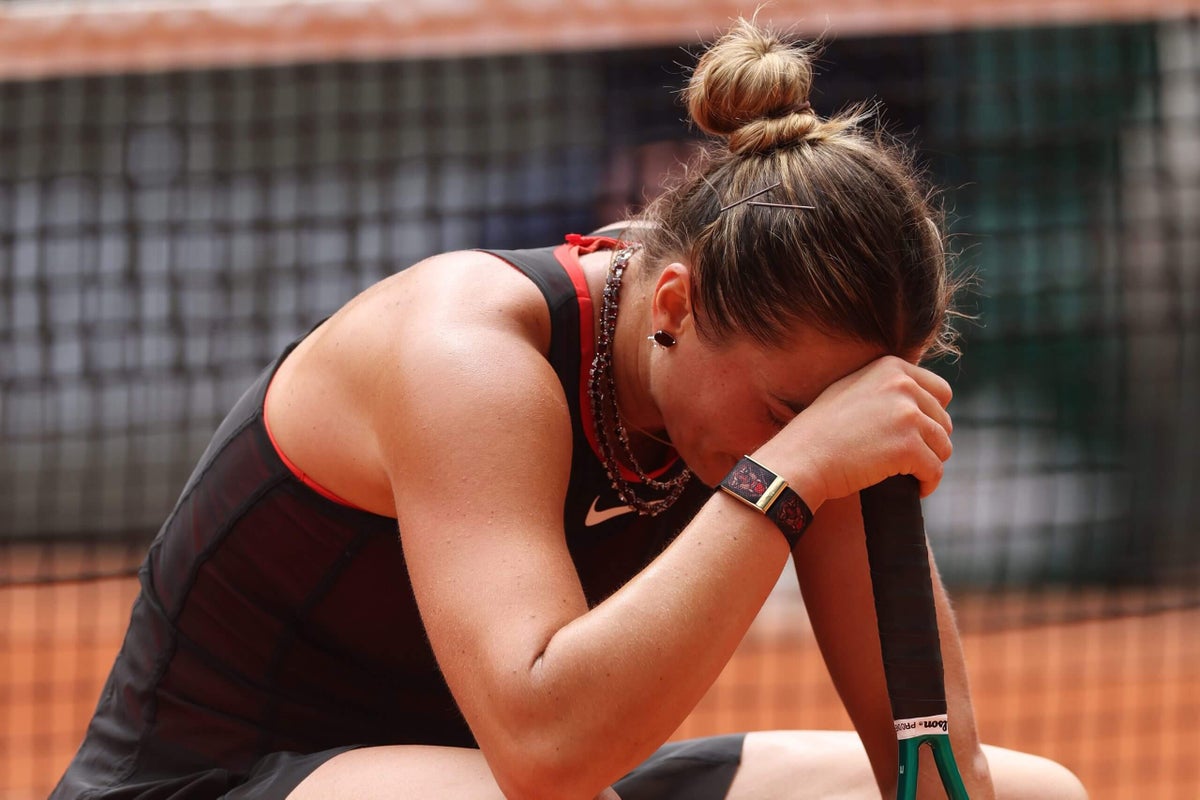
"I just want to quit tennis right now," a visibly devastated Sabalenka said in her post-match press conference, via the BBC. "I was up a set and a break and I don't know what happened. The wind was difficult but that's not an excuse. Diana played incredibly well."
The victory was Shnaider's second career win against a Top 10 player, and it propels her into a semifinal clash where she will be the underdog once again. But given her remarkable composure under pressure, few will count her out.
The 22-year-old's rise has been anything but conventional. After playing college tennis at North Carolina State — making her the first woman ranked in the Top 100 to play NCAA tennis since 1993 — Shnaider has steadily climbed the WTA rankings. She reached a career-high of No. 11 in May 2025 and won an Olympic silver medal in women's doubles at the Paris 2024 Games.
Known for her distinctive bandana and fearless left-handed game, Shnaider has drawn comparisons to some of the sport's greats. She has cited Rafael Nadal, Petra Kvitova, and Carlos Alcaraz as influences, and her never-say-die attitude on Wednesday certainly echoed the fighting spirit of Nadal.
Where Things Stand Now: Latest on Shnaider's Historic Run
Shnaider's victory was part of a remarkable day of shocks at Roland Garros. The quarterfinal result sent shockwaves through the tennis world, with fans and pundits alike marveling at the composure of the 25th seed. Social media lit up with tributes to Shnaider's resilience, with the hashtag #Shnaider trending worldwide.
For Sabalenka, the defeat marks another painful chapter in her French Open story. The world No. 1 has now won two Australian Open titles but has yet to find a way to conquer her demons on the Parisian clay. She struck 45 unforced errors against just 22 winners, a ratio that told the story of a player who lost her way as the match slipped away.
Shnaider, by contrast, managed her game superbly. She committed only 18 unforced errors while firing 28 winners, demonstrating a level of control that belied her inexperience at this stage of a major. The win also guarantees her a rise in the rankings, with a potential Top 20 spot within reach depending on her results in the semifinals and beyond.
What Happens Next: The Road Ahead for Shnaider
Shnaider will now prepare for her first Grand Slam semifinal, where she will face either the winner of the other quarterfinal matches. Regardless of the outcome, the 22-year-old has already secured her best Grand Slam result by a significant margin, surpassing her previous best of reaching the fourth round at the US Open.
Her draw now opens up considerably with Sabalenka's removal from the top half. Tennis analysts have noted that Shnaider's game is well-suited to the clay, with her heavy topspin forehand and sliding defensive skills making her a dangerous opponent for anyone left in the draw.
With her confidence at an all-time high after beating the world No. 1, Shnaider will believe she can go all the way. "This gives me so much confidence," she said. "I've worked so hard for moments like this. I'm just going to enjoy it and keep fighting."
The Bottom Line: Key Points to Remember
- Diana Shnaider came from 6-3, 4-1 down to defeat world No. 1 Aryna Sabalenka 3-6, 7-5, 6-0 in the French Open quarterfinals
- Shnaider won the last 10 games of the match in a row, a remarkable display of momentum and mental fortitude
- The 22-year-old Russian is appearing in her first Grand Slam semifinal, having previously played college tennis at NC State
- Sabalenka, a two-time Australian Open champion, has now suffered another painful early exit at Roland Garros, undone by windy conditions and 45 unforced errors
- Shnaider's unique path — from college tennis to Olympic silver medalist to Grand Slam semifinalist — makes her one of the most compelling stories in the sport today