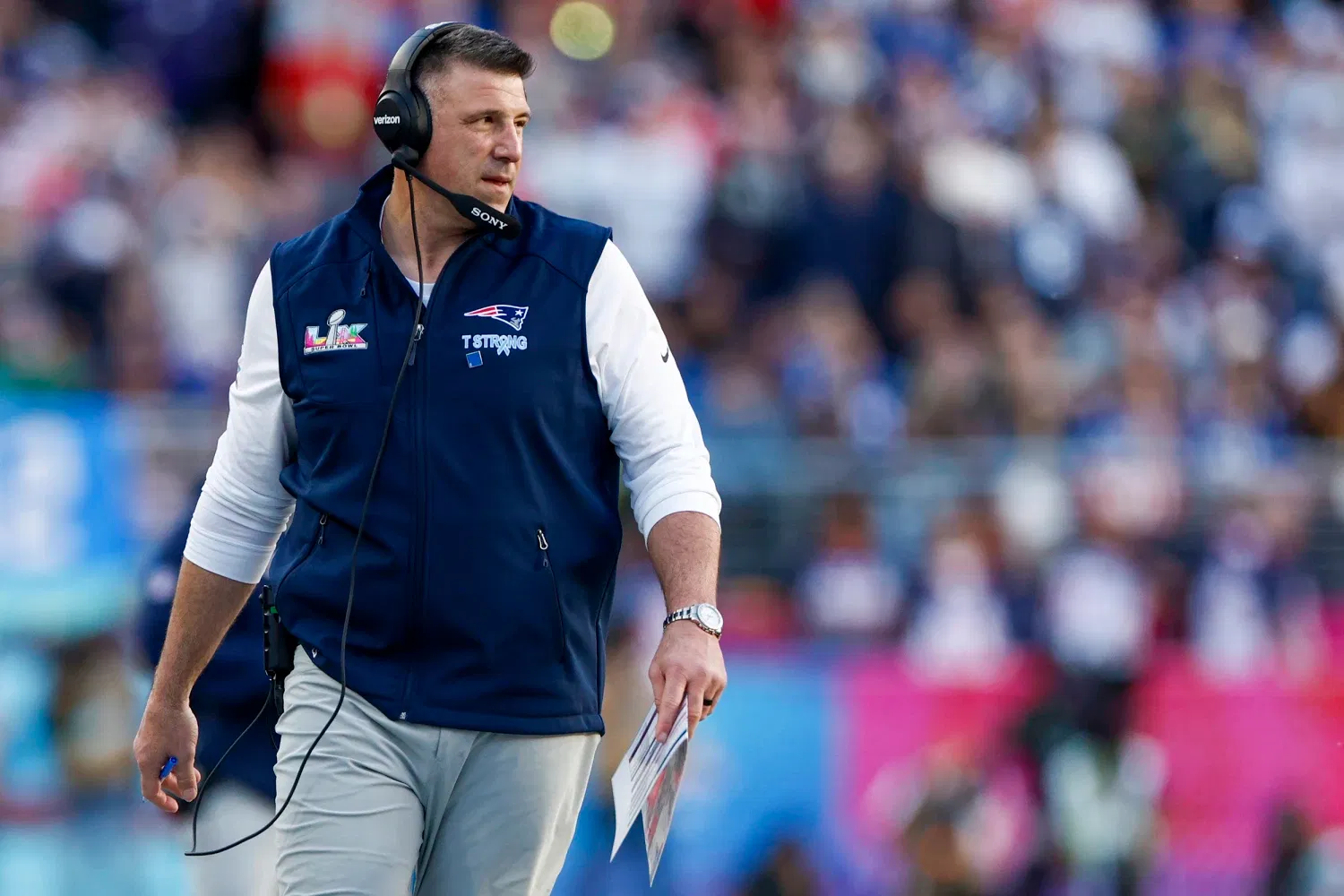
The NFL world was rocked this week when photos surfaced showing New England Patriots head coach Mike Vrabel and top New York Times NFL reporter Dianna Russini holding hands, hugging, and lounging together at a luxury Arizona hotel. Both married to other people, the high-profile duo immediately found themselves at the center of a media firestorm that raises serious questions about journalistic ethics, professional boundaries, and the intersection of personal relationships in sports media.
How the Vrabel-Russini Photos Sparked a National Controversy
According to exclusive photos published by Page Six on Tuesday, April 7, 2026, Vrabel and Russini were captured at the Ambiente luxury hotel in Sedona, Arizona. The images show the Patriots coach and the Athletic reporter poolside, in a hot tub, and on a private rooftop deck. Two particularly intimate photos depict them with intertwined fingers and embracing on the deck as the sun set behind the Red Rock formations.
Both individuals are married—Vrabel to his wife Jen, with whom he shares two children, and Russini to her husband—making the images instantly controversial. Within hours of publication, the photos went viral across social media, with fans and media analysts debating whether the interaction crossed professional lines.
The photos emerged just as Vrabel was preparing for the NFL draft and Russini was covering offseason moves, creating an awkward juxtaposition between their professional responsibilities and personal conduct.
From Arizona Resort to National Headlines: The 48-Hour Timeline
The sequence of events unfolded rapidly. On March 27, Vrabel was in Tempe, Arizona, for a scouting event at Arizona State University. According to Page Six sources, he and Russini later met at the Sedona resort, where Russini was staying with friends. The photos were taken during that encounter and subsequently obtained by Page Six, which published them on April 7.
By April 8, both Vrabel and Russini had issued statements. Vrabel told Page Six, "These photos show a completely innocent interaction and any suggestion otherwise is laughable. This doesn't deserve any further response." Russini emphasized that the photos didn't represent the larger group present, stating, "The photos don't represent the group of six people who were hanging out during the day. Like most journalists in the NFL, reporters interact with sources away from stadiums and other venues."
The Athletic, Russini's employer, also defended her. Executive Editor Steven Ginsberg called the photos "misleading and lack essential context," adding, "These were public interactions in front of many people. Dianna is a premier journalist covering the NFL and we're proud to have her at The Athletic."
Conflicting accounts emerged from anonymous sources. Some claimed Vrabel and Russini were part of a larger group, while others told Page Six they saw no one else with the pair. "No, he was with a girl," one witness said when asked if Vrabel was with friends.
Why This Controversy Matters: Ethics in Sports Journalism
The Vrabel-Russini incident highlights the delicate balance NFL reporters must maintain between developing sources and maintaining professional distance. As one of the league's most prominent insiders, Russini's credibility depends on her ability to cultivate relationships with coaches, players, and executives while avoiding conflicts of interest.
Sports media ethicists note that while reporters often socialize with sources, physical intimacy—especially between a journalist and a coach they cover—creates perception problems. "This isn't just about personal morality," said one media analyst. "It's about whether fans can trust that the reporting they're getting is unbiased and not influenced by personal relationships."
The controversy also touches on gender dynamics in sports media, where female reporters frequently face heightened scrutiny about their relationships with male subjects. Russini, who built her reputation through hard-nosed reporting and extensive sourcing, now faces questions about whether her access to Patriots information might be compromised.
Former NFL quarterback Boomer Esiason voiced concerns about the implications for journalistic integrity. "When you're in this business, perception is reality," he said. "These photos create a perception problem that won't easily go away."
Where Things Stand Now: Latest Developments
As of April 9, 2026, neither the Patriots organization nor the NFL has commented officially on the matter. However, sources close to the team indicate that internal discussions are ongoing about the appropriateness of Vrabel's conduct, though no disciplinary action is currently planned.
Media circles continue to debate the implications. Some argue that the incident reflects a broader issue of blurred lines in sports journalism, while others defend the right of professionals to have personal friendships outside work.
Meanwhile, social media has spawned a viral trend of people recreating the "finger-linking" pose from the photos, adding an unexpected layer of cultural commentary to the scandal. The hashtag #VrabelRussini has generated thousands of posts, with opinions sharply divided between those who see harmless friendship and those who perceive ethical violations.
Russini's previous interviews with Vrabel have resurfaced, with some viewers re-examining their on-camera chemistry. In a 2025 interview for The Athletic, Russini asked Vrabel about his coaching philosophy, with the exchange now being scrutinized through the lens of the recent photos.
What Happens Next: The Road Ahead for Vrabel and Russini
The immediate fallout will likely depend on how both individuals navigate the coming weeks. For Vrabel, the focus returns to football as the Patriots prepare for the draft and offseason workouts. However, the incident could affect his standing with ownership if further details emerge or if the story gains additional traction.
For Russini, the challenge is maintaining her journalistic integrity while addressing the elephant in the room. She may need to recuse herself from covering Patriots-related stories temporarily or be transparent about her relationship with Vrabel in future reporting. The Athletic and New York Times will likely conduct internal reviews of their ethics policies regarding reporter-source relationships.
Long-term, this incident may prompt news organizations to establish clearer guidelines about reporter-source relationships. Sports journalism has historically operated with more flexibility than political or business reporting, but the Vrabel-Russini controversy could accelerate calls for stricter boundaries.
Both individuals' careers will be watched closely in the coming months. Vrabel, who led the Patriots to the Super Bowl in his first season as head coach, faces pressure to keep the team focused amid distraction. Russini, widely respected for her reporting skills, must rebuild any trust that may have been eroded by the controversy.
The Bottom Line: Key Takeaways from the NFL Photo Scandal
- Photos show Patriots coach Mike Vrabel and reporter Dianna Russini holding hands and hugging at an Arizona hotel, creating immediate controversy
- Both are married to other people, adding personal dimension to professional scrutiny
- Vrabel calls the interaction "completely innocent," while Russini says photos lack context of larger group
- The Athletic defends Russini, calling the images "misleading" and emphasizing her journalistic credentials
- Ethical questions arise about reporter-source boundaries in sports journalism, with implications for trust in media
- No official action from Patriots or NFL yet, but internal discussions are ongoing
- The incident sparks broader conversation about gender, professionalism, and ethics in sports media
- Social media reaction includes viral trends and divided opinions on the appropriateness of the relationship
The Vrabel-Russini controversy represents more than just a celebrity gossip story—it's a case study in the complex intersection of sports, media, and personal relationships in the modern NFL. As the league continues to grow in popularity and influence, how it navigates these boundary issues will shape the future of sports journalism and fan trust for years to come.