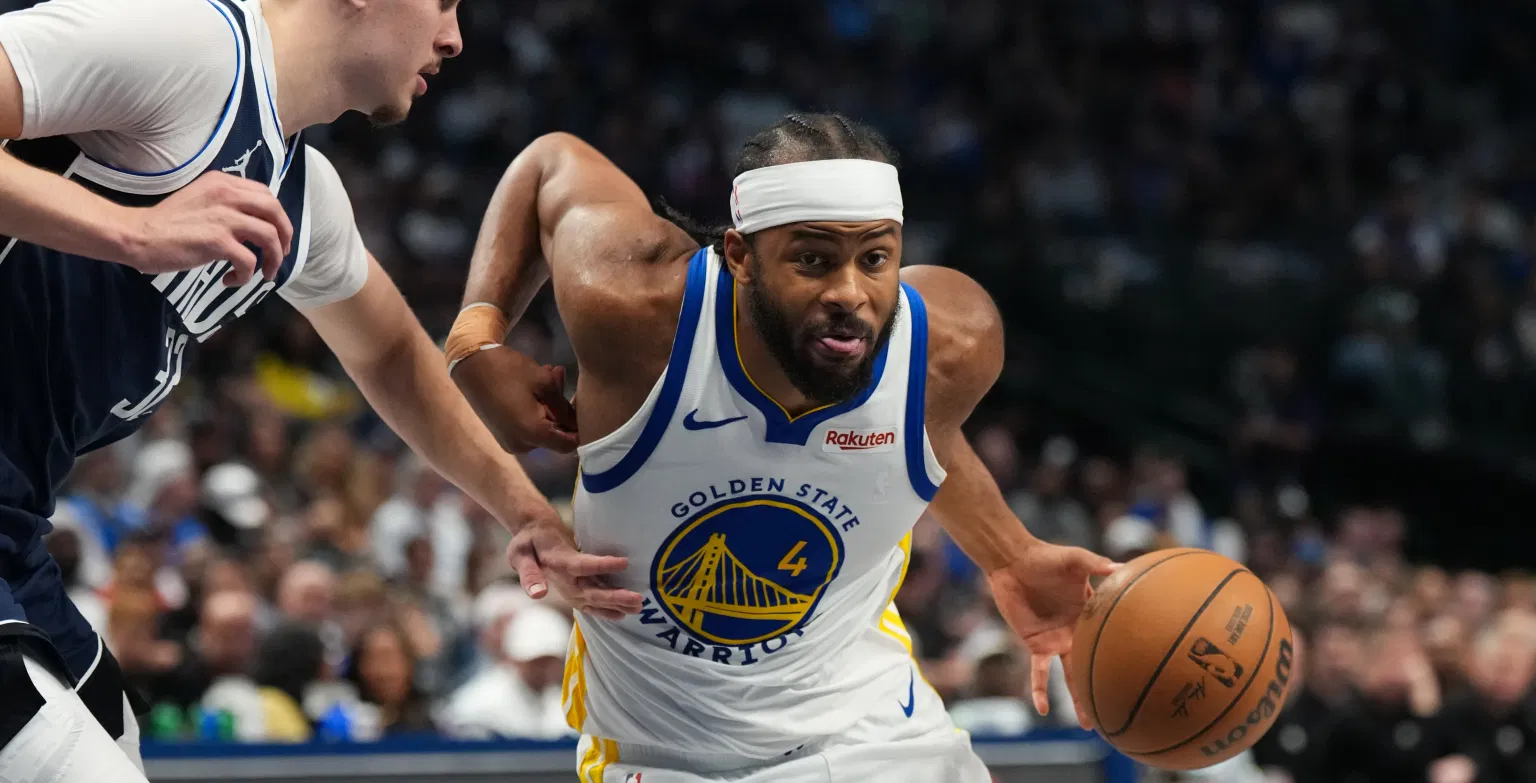
The Golden State Warriors' promising season took a devastating turn this week when rising guard Moses Moody suffered a season-ending torn patellar tendon in his left knee during Monday's overtime victory over the Dallas Mavericks. The injury, confirmed by MRI on Tuesday, will require surgery later this week and leaves the Warriors without one of their most improved players as they push for playoff positioning. Moody's heartbreaking exit from what was supposed to be his comeback game after a 10-game wrist injury absence has sent shockwaves through the organization and raised serious questions about both his future and the team's championship aspirations.
How Moody's Season Came to a Crushing End
With just 58.5 seconds remaining in overtime and the Warriors clinging to a narrow lead, Moody found himself alone on a fast break opportunity that should have been a routine dunk. Instead, as he planted his left leg to elevate, his knee buckled beneath him in a non-contact injury that immediately signaled serious trouble. According to eyewitness accounts from the Golden State of Mind, Moody's leg bent at a gruesome angle with what appeared to be bone protruding, prompting broadcast cameras to quickly cut away from the distressing scene.
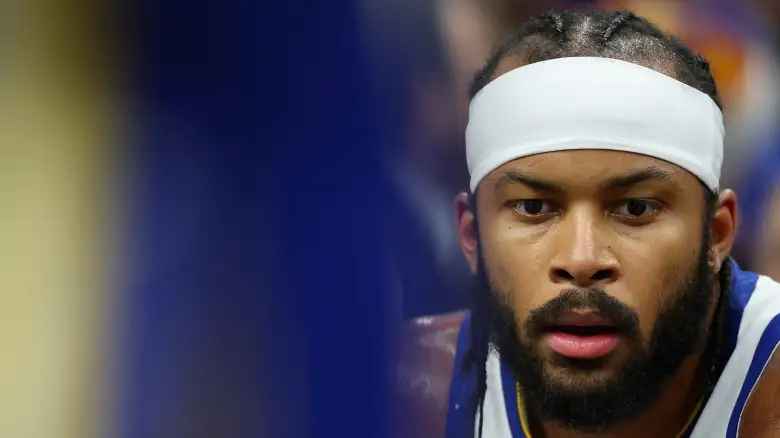
"An awful and heartbreaking scene unfolded on Monday night," described the Golden State of Mind report, noting that Moody was eventually taken off the court in an air brace and stretcher while both teams and the Dallas crowd offered silent support. The injury occurred during Moody's first game back after missing 10 consecutive contests with a wrist issue, adding cruel irony to what should have been a triumphant return to action.
Team officials confirmed the worst on Tuesday when MRI results revealed a complete tear of the patellar tendon in his left knee. According to multiple reports including Sports Illustrated and NBA.com, the Warriors announced that Moody would undergo surgery later this week and miss the remainder of the 2025-26 season. The patellar tendon connects the kneecap to the shin bone and is crucial for jumping, running, and explosive movements—making it particularly devastating for a basketball player.
From Dunk Attempt to Surgery: The 48-Hour Timeline
The sequence of events following Moody's injury unfolded with sobering rapidity. Monday night's game concluded with a Warriors victory, but the locker room celebration was muted by concern for their fallen teammate. By Tuesday morning, Moody had undergone extensive imaging at a Dallas medical facility, where the torn patellar tendon was confirmed. The Warriors' medical staff immediately began consulting with orthopedic specialists to determine the best surgical approach.
According to Heavy.com's detailed medical analysis, the surgical procedure will involve reattaching the torn tendon to the kneecap using specialized techniques such as suture anchors or tunnels drilled through the bone. Dr. Nirav Pandya, a professor of orthopedic surgery at UCSF, explained in a social media video that "a patellar tendon rupture in an athlete requires surgery to repair the tendon and reattach it to the patella. Return to play timelines land between 9–12 months."
The Warriors organization released an official statement Tuesday afternoon confirming the diagnosis and surgical plan. Head coach Steve Kerr, visibly emotional in post-game comments, had initially expressed grave concern: "We don't know what it is but it sure looked bad," Kerr told reporters via Warriors reporter Ray Almeda. "Just hoping for the best." That hope was dashed by the MRI results, transforming what began as cautious optimism into concrete reality.
Why This Injury Could Reshape Moody's Career and Warriors' Future
At just 23 years old, Moses Moody was enjoying a breakout season that positioned him as a cornerstone of the Warriors' future. Through 60 games (49 starts), he averaged career highs of 12.1 points, 3.3 rebounds, and 1.6 assists while shooting a remarkable 40.1% from three-point range. His development had been one of the bright spots in a season of transition for Golden State, offering hope that the post-Curry era might still feature competitive basketball.
Medically, the patellar tendon injury presents unique challenges. Unlike some soft-tissue injuries that can heal with rest and rehabilitation, a complete tendon rupture requires surgical intervention. Dr. Pandya emphasized that "the patellar tendon is essentially sewn back to the patella," with successful repair restoring proper kneecap position and tendon function. However, the recovery process is lengthy and uncertain—studies cited by Heavy.com indicate that only 75-90% of NBA players return to the court after this injury, and those who do often require a year or two to regain their previous performance levels.
For the Warriors, the timing couldn't be worse. Moody's $11.6 million salary for 2025-26 represents significant cap space that now yields zero on-court production. His $12.5 million salary for 2026-27 also becomes a question mark, as his availability for the start of next season remains in serious doubt. With Stephen Curry's championship window narrowing and the team already facing luxury tax constraints, Moody's injury complicates both short-term roster construction and long-term planning.
Where Moody and the Warriors Stand Today
As of Wednesday morning, Moody remains in Dallas preparing for surgery scheduled for later this week. The Warriors have not announced which surgeon will perform the procedure or the specific hospital where it will take place, but team sources indicate they're seeking top orthopedic specialists with experience treating professional athletes.
Within the Warriors' locker room, the mood is reportedly somber but determined. Teammates who spoke to NBC Sports Bay Area described Moody as universally respected and beloved, with his work ethic and positive attitude making him a favorite among both players and coaches. "The whole Warriors team is 'crushed' for Moses Moody," Steve Kerr told 95.7 The Game's Willard & Dibs show. "He's such a great human being and was playing the best basketball of his career."
On the court, the Warriors must immediately adjust their rotation. Moody's minutes will likely be distributed among Brandin Podziemski, Gary Payton II, and possibly increased roles for younger players like Gui Santos. Coach Kerr has historically favored versatile lineups, but replacing Moody's combination of size (6'6"), shooting, and defensive versatility won't be easy. The team's depth, once considered a strength, now faces its most severe test of the season.
The Long Road to Recovery and Roster Implications
Medical experts uniformly agree that Moody faces a challenging rehabilitation process measured in months rather than weeks. The standard recovery timeline for patellar tendon surgery ranges from nine to twelve months, with the initial phase focused on protecting the surgical repair through immobilization and controlled movement. Only after several months will Moody begin weight-bearing exercises, with basketball activities likely not resuming until at least six months post-surgery.
"Somewhere between 75 to 90 percent of NBA players make it back, based on the study you read," Dr. Pandya noted in his analysis. "But usually for the first year or two afterwards, it can be hard to get back to the same level of play." This sobering reality means that even if Moody returns for the 2026-27 season, he may not be the same explosive athlete that Warriors fans have grown accustomed to watching.
Financially, the injury creates complications for both player and team. Moody is in the first year of a three-year, $39 million extension signed last October. While his salary remains guaranteed, the Warriors now have $37.5 million in committed money to a player who may not contribute meaningfully until the 2027-28 season. This could impact their ability to make offseason moves, particularly if they hoped to package Moody's salary in a trade for another impact player.
Key Takeaways from Moody's Season-Ending Injury
The sudden loss of Moses Moody represents more than just another basketball injury—it's a pivotal moment that could alter the trajectory of both a promising young career and a franchise in transition. Several key points emerge from this developing story:
- Medical Reality: Patellar tendon tears require surgical repair and extensive rehabilitation, with typical NBA recovery timelines of 9-12 months and uncertain return-to-performance outcomes.
- Roster Impact: The Warriors lose their most improved player and a key rotational piece during a critical playoff push, forcing immediate adjustments to their rotation and strategy.
- Future Implications: At 23, Moody's development arc is now paused indefinitely, creating uncertainty about his long-term role and potential with the organization.
- Financial Considerations: With $37.5 million guaranteed over the next three seasons, Moody's injury affects the Warriors' salary cap flexibility and roster-building options.
- Human Element: Beyond statistics and contracts, this is a devastating personal setback for a young player who had worked tirelessly to establish himself as an NBA contributor.
As Moody prepares for surgery and the Warriors regroup for the final stretch of the season, the basketball world watches with concern for a player whose potential seemed limitless just days ago. The road ahead will test Moody's resilience, the Warriors' depth, and the medical team's expertise—but if there's any consolation, it's that modern sports medicine has made remarkable advances in treating such injuries, offering hope that this story may yet have a triumphant second chapter.