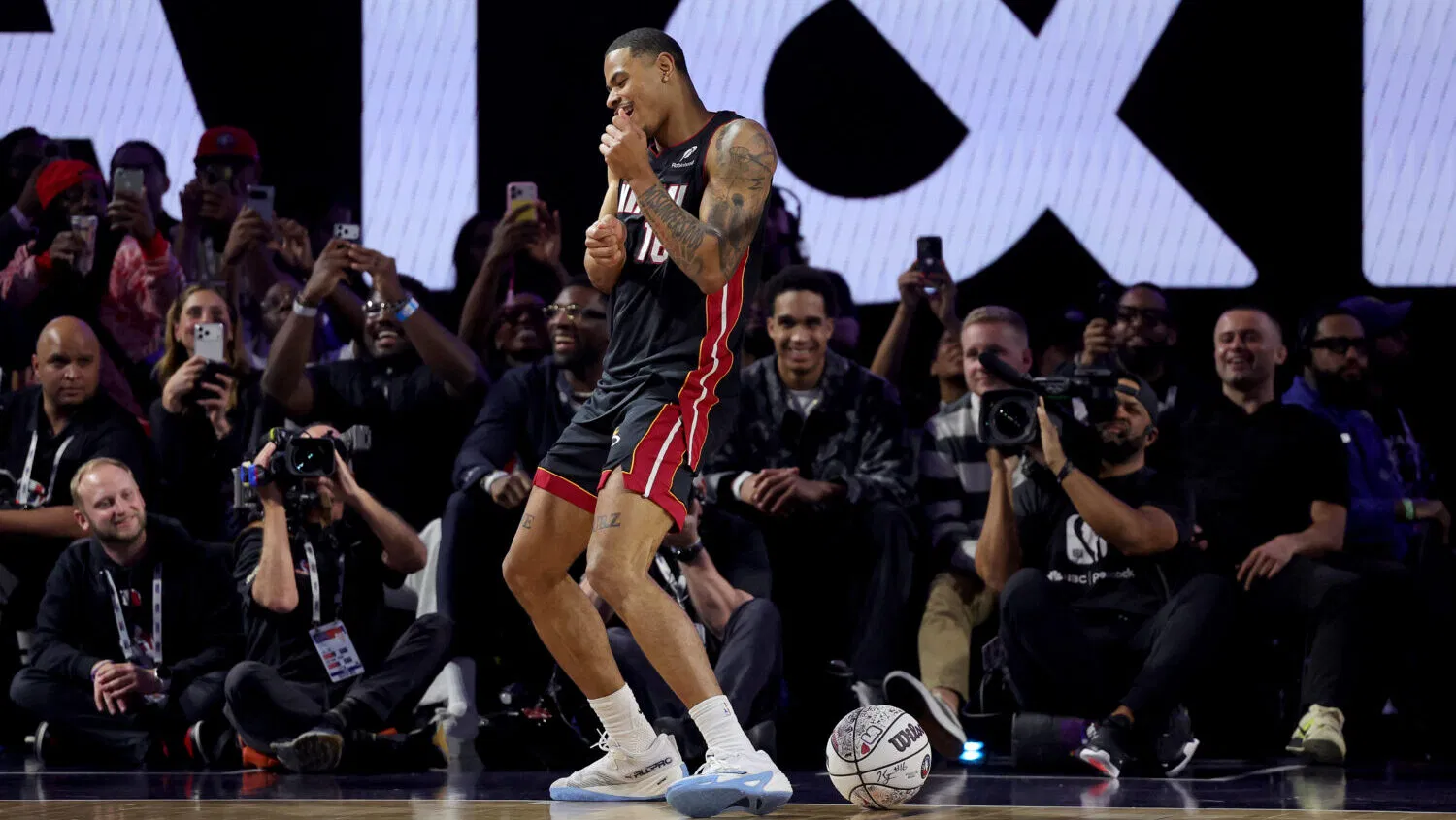
In a moment that will be remembered in both University of Arizona and NBA All-Star Weekend history, Miami Heat forward Keshad Johnson soared to victory in the 2026 Slam Dunk Contest, defeating fellow former Wildcat Carter Bryant in an electrifying final round at Intuit Dome. The 24-year-old California native not only claimed the dunk championship but also broke a longstanding drought for Arizona alumni, becoming the first Wildcat to win the event after four previous attempts by former Arizona players had fallen short.
How Showtime Johnson Stole the Spotlight at All-Star Saturday
The path to victory was anything but straightforward for Johnson, who entered the competition as something of an underdog against higher-profile participants. In the first round, Johnson faced off against Orlando Magic guard Jase Richardson and Los Angeles Lakers forward Jaxson Hayes, alongside his Arizona counterpart Carter Bryant of the San Antonio Spurs. Johnson's initial dunk earned a solid 47.4 from the judges, while Bryant posted a 45.6. The competition intensified in the second attempt of the opening round, where Bryant secured his spot in the finals with an impressive 49.2, forcing Johnson to respond with a 45.4 that barely edged him into the championship matchup.
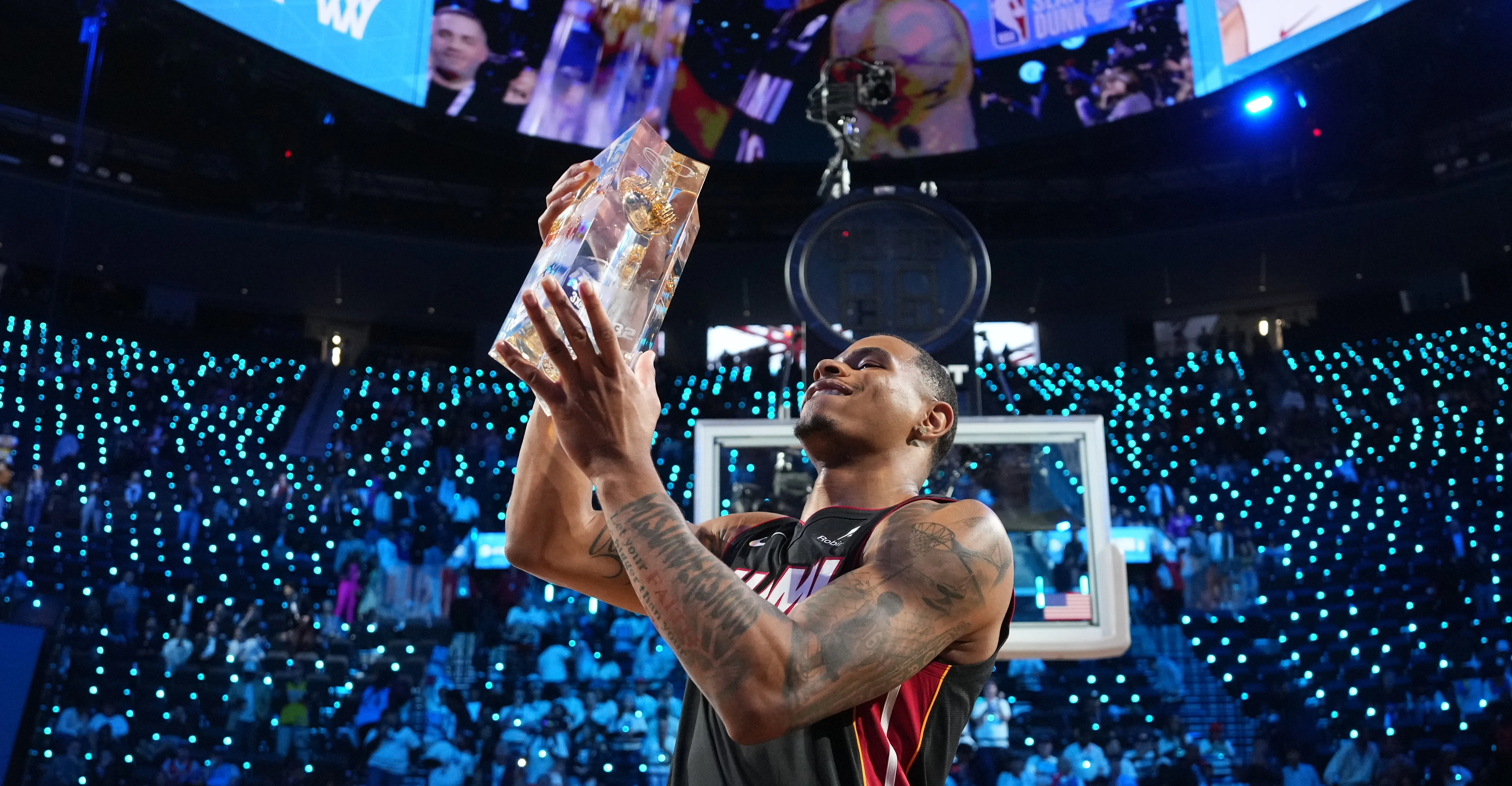
"I just came out here and showed them who Showtime was," Johnson would later say, referencing the nickname he's carried since his college days. The championship round delivered exactly the drama fans had hoped for, with Johnson opening with a 49.6 that seemed poised to put pressure on his opponent. But Bryant responded with perfection—a flawless 50 on his first dunk of the final round that brought the Inglewood crowd to its feet and appeared to shift momentum decisively in his favor.
From Near-Perfection to Championship Redemption
Facing what seemed like insurmountable odds after Bryant's perfect score, Johnson reached deep into his arsenal for his second dunk of the championship round. What followed was a display of athleticism and creativity that earned a 47.8 from the judges—not a perfect score, but enough to put all the pressure back on Bryant. The Spurs rookie, attempting an exceptionally complicated final dunk, was unable to complete his planned maneuver and had to settle for a conventional dunk that failed to impress the judges sufficiently.
When the final scores were tallied, Johnson's consistency had prevailed: his 97.4 total in the championship round outlasted Bryant's effort, making him the 2026 AT&T Slam Dunk champion. The victory was particularly sweet given the historical context—Johnson and Bryant had just added to the list of former Wildcats to participate in the dunk contest, bringing the overall total to six players and eight appearances. But where Richard Jefferson (2003), Andre Iguodala (2006), Chase Budinger (2012), and Aaron Gordon (2016, 2017, 2020) had all fallen short of winning, Johnson had finally broken through.
"Johnson marks the first NBA Wildcat to win the contest after four players before him did not win," reported the Arizona Desert Swarm, highlighting the significance of the breakthrough. The all-Wildcats final itself was a testament to the basketball program's ability to develop high-flying talent, even if previous Arizona participants had managed only second-place finishes—with Gordon being the only former Wildcat to achieve that result twice.
The Arizona Legacy: From Jefferson to Johnson
The historical weight of Johnson's victory cannot be overstated when examining the University of Arizona's relationship with the NBA Slam Dunk Contest. Richard Jefferson's participation in 2003 marked the program's first entrant into the event, followed by Andre Iguodala's memorable performance in 2006 that included dunking over Allen Iverson. Chase Budinger brought his own brand of athleticism to the 2012 competition, but it was Aaron Gordon who came closest to victory with his epic battles against Zach LaVine in 2016 and 2017, then another strong showing in 2020.
Gordon's near-misses—particularly his legendary 2016 duel with LaVine that many consider the greatest dunk contest in history—had established Arizona as a producer of dunk contest excellence, but not quite champions. Johnson's victory changes that narrative fundamentally, providing the Tucson program with its first dunk champion and validating the athletic development that has become a hallmark of Arizona basketball under multiple coaching regimes.
The symmetry of Johnson defeating another Wildcat in the final adds another layer to the story. Carter Bryant, despite his second-place finish in the dunk contest, didn't leave All-Star Weekend empty-handed. The Spurs rookie was part of the Rising Stars championship team, playing for Team Vince under the coaching of NBA Hall of Famer Vince Carter and contributing nine points across two games. The dual success of Johnson and Bryant during All-Star Weekend represents perhaps the strongest showing ever for Arizona alumni at the NBA's midseason showcase.
The G League Grind That Prepared Johnson for This Moment
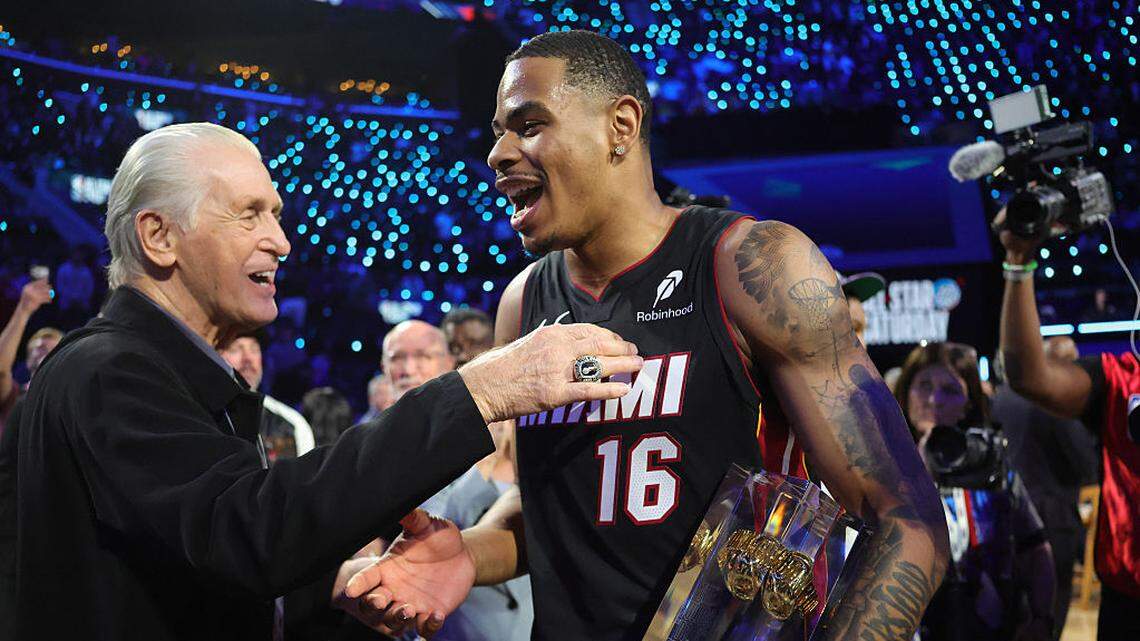
What makes Johnson's victory particularly compelling is the path he took to reach this pinnacle. Unlike many dunk contest participants who arrive as lottery picks or established stars, Johnson's journey included undrafted free agency, G League assignments, and the kind of professional uncertainty that makes All-Star Weekend glory seem distant. Born in Oakland, California in 2001, Johnson began his college career at San Diego State before transferring to Arizona for his final season, where he averaged 7.7 points and five rebounds per game.
After going undrafted in 2024, Johnson signed a two-way contract with the Miami Heat and spent significant time with their G League affiliate, the Sioux Falls Skyforce. There, he developed into a standout performer, averaging 21.2 points and 8.3 rebounds per game while honing the athletic package that would eventually win him a dunk championship. His NBA minutes have been limited—averaging just 7.6 minutes per game this season—making his dunk contest victory all the more remarkable as a breakthrough moment on the national stage.
"Heat's Keshad Johnson announces himself to NBA world by winning dunk contest: 'Now they know who I am,'" reported the Miami Herald, capturing the significance of the moment for a player who had largely operated outside the spotlight. The headline reflects Johnson's own post-victory sentiment, expressing both satisfaction with the win and recognition that it represents a turning point in his professional identity.
What the Dunk Crown Means for Johnson's NBA Future
In the immediate aftermath of his victory, questions naturally turn to what this means for Johnson's career trajectory. Dunk contest champions have followed varied paths: some, like Zach LaVine and Aaron Gordon, used the event as a springboard to greater stardom and expanded roles. Others have seen it remain a career highlight without corresponding growth in their everyday NBA contributions. For Johnson, the challenge will be translating Saturday night's success into increased trust from the Heat coaching staff and more consistent rotation minutes.
The Heat organization, known for developing undervalued talent and maximizing player potential, now faces an interesting decision regarding Johnson's role. His athleticism has never been in question, but his dunk contest victory showcased a competitive poise and performance-under-pressure quality that could translate to meaningful game situations. With Miami perpetually in contention mode in the Eastern Conference, finding ways to leverage Johnson's specific skills could become a priority in the season's second half.
There's also the question of whether Johnson will return to defend his title in 2027. Recent history shows mixed participation patterns among champions, with some opting out to avoid the pressure of defending while others embrace the opportunity to build their brand. Given Johnson's apparent comfort on the All-Star stage and the positive reception to his performance, another appearance seems plausible—especially if the NBA seeks to capitalize on the compelling Arizona storyline he represents.
The New Face of Arizona Dunking and What Comes Next
As the first Arizona alumnus to hoist the Slam Dunk Contest trophy, Johnson has irrevocably changed the program's relationship with the event. No longer will Arizona be known only for near-misses and memorable performances that fell just short; the Tucson pipeline now produces champions. This development could have recruiting implications for the Wildcats program, which can now point to Johnson as evidence that Arizona prepares athletes for the NBA's most visible showcases.
For Johnson personally, the victory represents a career-defining moment that transcends the typical boundaries of a midseason exhibition. "Now they know who I am" isn't just a clever quote—it's a declaration of arrival from a player who has navigated the less-glamorous corridors of professional basketball to emerge on one of the sport's biggest stages. The challenge now becomes building on that recognition, transforming dunk contest fame into sustained NBA relevance.
Given the quality of performance both Johnson and Bryant delivered in this year's contest, the possibility exists for an All-Star Weekend rematch in future years. The NBA has shown willingness to bring back compelling storylines and rivalries, and an Arizona reunion in the dunk contest would certainly qualify. Whether that happens in 2027 or beyond, Johnson has already secured his place in both University of Arizona and NBA All-Star history—the first Wildcat to fly highest when it mattered most.
Key Takeaways from Keshad Johnson's Historic Victory
Johnson's dunk contest win represents multiple breaking points: for Arizona alumni in the event, for his own career trajectory, and for the notion that dunk champions must come from traditional paths of NBA stardom. His victory through consistency over perfection—outlasting Bryant despite the Spurs rookie's perfect 50—offers a lesson in competitive resilience. The G League background that once might have been seen as a limitation now appears as valuable preparation for seizing a moment when it arrived.
Perhaps most importantly, Johnson's success reinforces the increasingly fluid nature of NBA career development in the modern era. Rosters spots and rotation minutes are earned through continuous improvement and opportunity-seizing, and Johnson's All-Star Weekend performance demonstrates how a single night can redefine a player's professional narrative. As the Miami Heat return from the All-Star break and push toward the playoffs, they do so with a newly crowned dunk champion in their midst—one whose journey to that title might just be beginning.