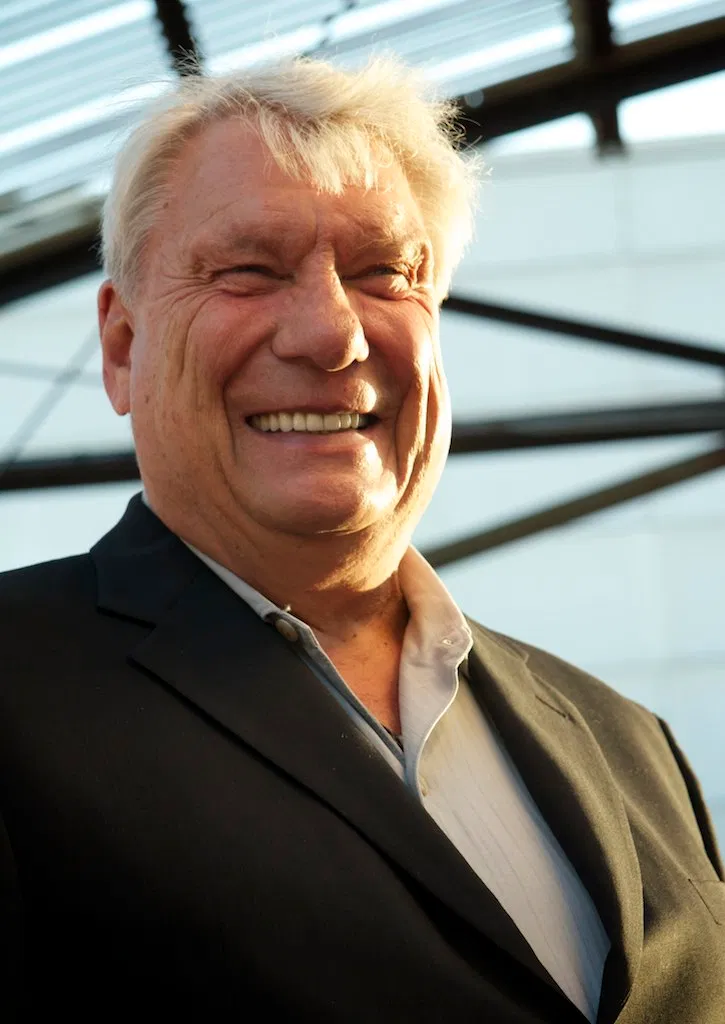
Don Nelson, the Hall of Fame basketball coach whose innovative "Nellie Ball" offense and 1,335 career victories made him the winningest coach in NBA history for over a decade, died on August 9, 2026, in Frisco, Texas. He was 86. His passing marks the end of an era for the NBA — one defined by creative strategy, iconoclastic thinking, and a career that touched six different franchises as both a player and coach across nearly half a century in professional basketball.
Nelson's death comes just one year after he received the Chuck Daly Lifetime Achievement Award in 2025, a fitting capstone to a career that saw him inducted into the Naismith Basketball Hall of Fame in 2012 and named one of the Top 10 coaches in NBA history. He is survived by his family and a basketball legacy that fundamentally changed the way the game is played at every level.
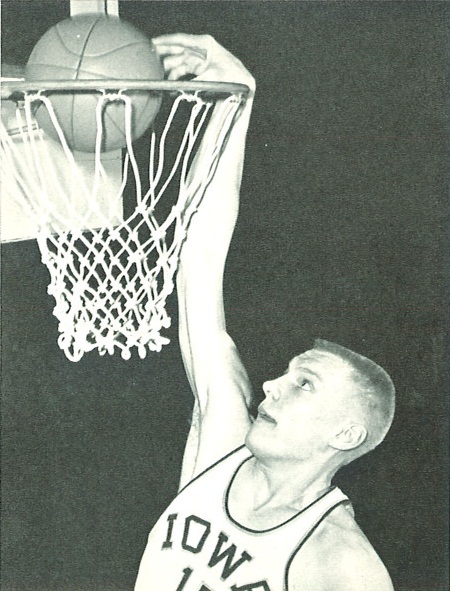
From Iowa Farm to NBA Royalty: The Don Nelson Story
Donald Arvid Nelson was born on May 15, 1940, in Muskegon, Michigan, and grew up on his grandfather's rural Illinois farm near Sherrard. He first learned to shoot baskets using a spokeless bicycle wheel nailed to a shed in the family chicken yard — a humble beginning that belied the towering career to come. After his family lost the farm, they relocated to Rock Island, Illinois, where Nelson blossomed into a high school star at Rock Island High School, averaging 20.2 points per game as a senior.
Lightly recruited out of high school — his father wanted him to become a watch repairman — Nelson chose the University of Iowa, where he became a third-team All-American in 1962. The Chicago Zephyrs selected him in the third round of the 1962 NBA Draft, launching a 14-year playing career that peaked with the Boston Celtics dynasty. Nelson won five NBA championships with the Celtics (1966, 1968, 1969, 1974, 1976), establishing himself as a reliable forward alongside legends like Bill Russell and John Havlicek. Boston retired his No. 19 jersey in 1978. Over his playing career, he amassed 10,898 points, 5,192 rebounds, and 1,526 assists.
The Coaching Genius: How Nellie Ball Changed Everything
Nelson's true genius, however, emerged from the sideline. Beginning his coaching career as an assistant with the Milwaukee Bucks in 1976 before taking over as head coach that same season, Nelson would go on to coach the Bucks (1976–1988), Golden State Warriors (1988–1995, 2006–2010), New York Knicks (1995–1996), and Dallas Mavericks (1997–2005). His career record of 1,335 wins and 1,063 losses (.557 winning percentage) made him, for more than a decade, the winningest coach in NBA history.
But Nelson was far more than a compiler of victories. He was one of basketball's great innovators. His signature "Nellie Ball" philosophy emphasized speed, spacing, and positionless basketball — concepts that are now ubiquitous across the NBA. He is widely credited with pioneering the point forward, deploying versatile forwards as primary ball-handlers and playmakers, a tactic that paved the way for modern stars like LeBron James and Giannis Antetokounmpo.
His three NBA Coach of the Year awards (1983, 1985, 1992) recognized his ability to maximize talent, nowhere more dramatically than with the 2006–07 Warriors. That team, an 8-seed, shocked the basketball world by defeating the 67-win Dallas Mavericks in the first round of the playoffs — one of the greatest upsets in NBA history and the first time an 8-seed beat a 1-seed in a seven-game series.
Timeline: From Player to Legend — Key Milestones in Don Nelson's Career
- 1940 — Born May 15 in Muskegon, Michigan; raised on a farm near Sherrard, Illinois
- 1958 — Graduates from Rock Island High School after averaging 20.2 points as a senior
- 1962 — Named third-team All-American at Iowa; drafted 17th overall by Chicago Zephyrs
- 1965–1976 — Plays 11 seasons with Boston Celtics, winning five NBA championships
- 1976 — Begins coaching career with Milwaukee Bucks, eventually serving as head coach until 1988
- 1983, 1985, 1992 — Wins three NBA Coach of the Year awards
- 1994 — Coaches "Dream Team II" to gold at the FIBA World Championship in Toronto
- 2007 — Engineers historic playoff upset as 8-seed Warriors defeat 67-win Mavericks
- April 7, 2010 — Passes Lenny Wilkens for the all-time NBA wins record (1,333rd win)
- 2012 — Inducted into the Naismith Basketball Hall of Fame
- 2022 — Surpassed by Gregg Popovich on the all-time wins list
- 2025 — Receives the Chuck Daly Lifetime Achievement Award
- August 9, 2026 — Dies at age 86 in Frisco, Texas
Why Don Nelson's Legacy Endures: The Architect of Modern Basketball
To understand Don Nelson's impact, look no further than any NBA game played today. The pace-and-space offense, the de-emphasis of traditional positions, the willingness to play small lineups and shoot three-pointers at high volume — these were Nelson's innovations, often dismissed as gimmicks during his coaching prime but now embraced as orthodoxy. Golden State Warriors head coach Steve Kerr, who played for Nelson and later coached the Warriors to four championships, has frequently credited Nelson's influence on the team's championship blueprint.
Nelson's coaching tree and influence extend deep into the modern game. His unconventional approach — sometimes called "mad scientist" by admirers and critics alike — produced winning teams in Milwaukee, Golden State (twice), and Dallas. He compiled winning records with rosters that often lacked traditional superstar talent, using creativity and matchup exploitation to bridge talent gaps. His 1,335 career wins stood as the NBA record for 12 years until Gregg Popovich surpassed the mark in 2022, a testament to the sheer volume and longevity of his success.
Beyond the X's and O's, Nelson was beloved for his irreverent personality and everyman charm. He was known to enjoy a beer with reporters after games and never lost the down-to-earth sensibility of his Midwestern roots. In an NBA increasingly driven by analytics and corporate polish, Nelson remained a link to the game's more freewheeling past.
The Final Chapter: Nelson's Passing and the Basketball World's Reaction
Nelson died in Frisco, Texas, a suburb of Dallas where he maintained deep ties from his years coaching the Mavericks. The Chuck Daly Lifetime Achievement Award he received in 2025 served as a poignant final recognition from the coaching fraternity he helped define. The award, named for the Hall of Fame coach of the Detroit Pistons' "Bad Boys" teams, is given annually by the National Basketball Coaches Association to honor coaches who have made extraordinary contributions to the game.
Tributes from across the sports world are expected in the coming days. Nelson's unique place in basketball history — as a five-time champion player, the architect of game-changing offensive systems, and the winningest coach in NBA history for more than a decade — ensures that his passing will be felt deeply throughout the league and beyond.
What's Next: Honoring a Giant of the Game
The basketball community will now turn to memorializing one of its most influential figures. Given Nelson's Hall of Fame status and the breadth of his contributions — as a player, coach, executive, and innovator — expect tributes from every corner of the NBA. The Celtics, Bucks, Warriors, Knicks, and Mavericks all have reason to honor the man who shaped their franchises in lasting ways.
Nelson's legacy is already secure: enshrined in Springfield, remembered in record books, and visible every night when NBA teams spread the floor, push the pace, and let versatile forwards orchestrate the offense. He was, in the truest sense, ahead of his time. The game simply had to catch up.
The Bottom Line: Don Nelson's Basketball Legacy at a Glance
- 5× NBA Champion as a player with the Boston Celtics (1966, 1968, 1969, 1974, 1976)
- No. 19 retired by the Boston Celtics in 1978
- 1,335 career coaching wins — held the all-time NBA record from 2010 to 2022
- 3× NBA Coach of the Year (1983, 1985, 1992)
- Hall of Fame inductee (Naismith Basketball Hall of Fame, Class of 2012)
- Pioneer of "Nellie Ball" and the point forward concept that shaped modern basketball
- Chuck Daly Lifetime Achievement Award recipient (2025)
- Coached Dream Team II to gold at the 1994 FIBA World Championship